

Sun Safety for Families Near Hugo, MN
Hugo, Minnesota, is a wonderful place to raise a family. With Oneka Lake, Bald Eagle Lake, and numerous parks and trails throughout the area, there is no shortage of opportunities to get outside and enjoy the Minnesota summer. But as any parent knows, keeping kids safe in the sun requires more than just a bottle of sunscreen tossed in the beach bag.
At Clarus Dermatology’s Hugo office, we work with families throughout the northeast metro to establish sun safety habits that protect children and adults alike. Here is what every Hugo-area family should know about protecting their skin during the outdoor season.
Why Sun Safety Starts in Childhood
The sun safety habits your family establishes now have lifelong consequences. Research shows that just one blistering sunburn during childhood or adolescence nearly doubles the risk of developing melanoma later in life. Children’s skin is thinner and more sensitive to UV radiation than adult skin, making them particularly vulnerable to sun damage.
According to the Skin Cancer Foundation, approximately 23 percent of lifetime sun exposure occurs before age 18. The habits children learn about sun protection—or fail to learn—shape their skin health for decades to come. Teaching kids to protect their skin is not just about preventing a painful sunburn today; it is about reducing their cancer risk for the rest of their lives.
Sun Safety Tips for Every Family Member
Infants (Under 6 Months)
The American Academy of Dermatology recommends keeping babies under six months out of direct sunlight entirely. Their skin is extremely sensitive and lacks the melanin needed for even minimal UV protection. Use the following precautions:
- Keep infants in the shade at all times when outdoors
- Dress them in lightweight, long-sleeved clothing and a wide-brimmed hat
- If shade is unavailable, a small amount of SPF 30+ sunscreen can be applied to exposed areas (consult your pediatrician first)
- Avoid outdoor activities during peak UV hours (10 a.m. to 4 p.m.)
Children and Teens
For children six months and older, a comprehensive sun protection approach includes:
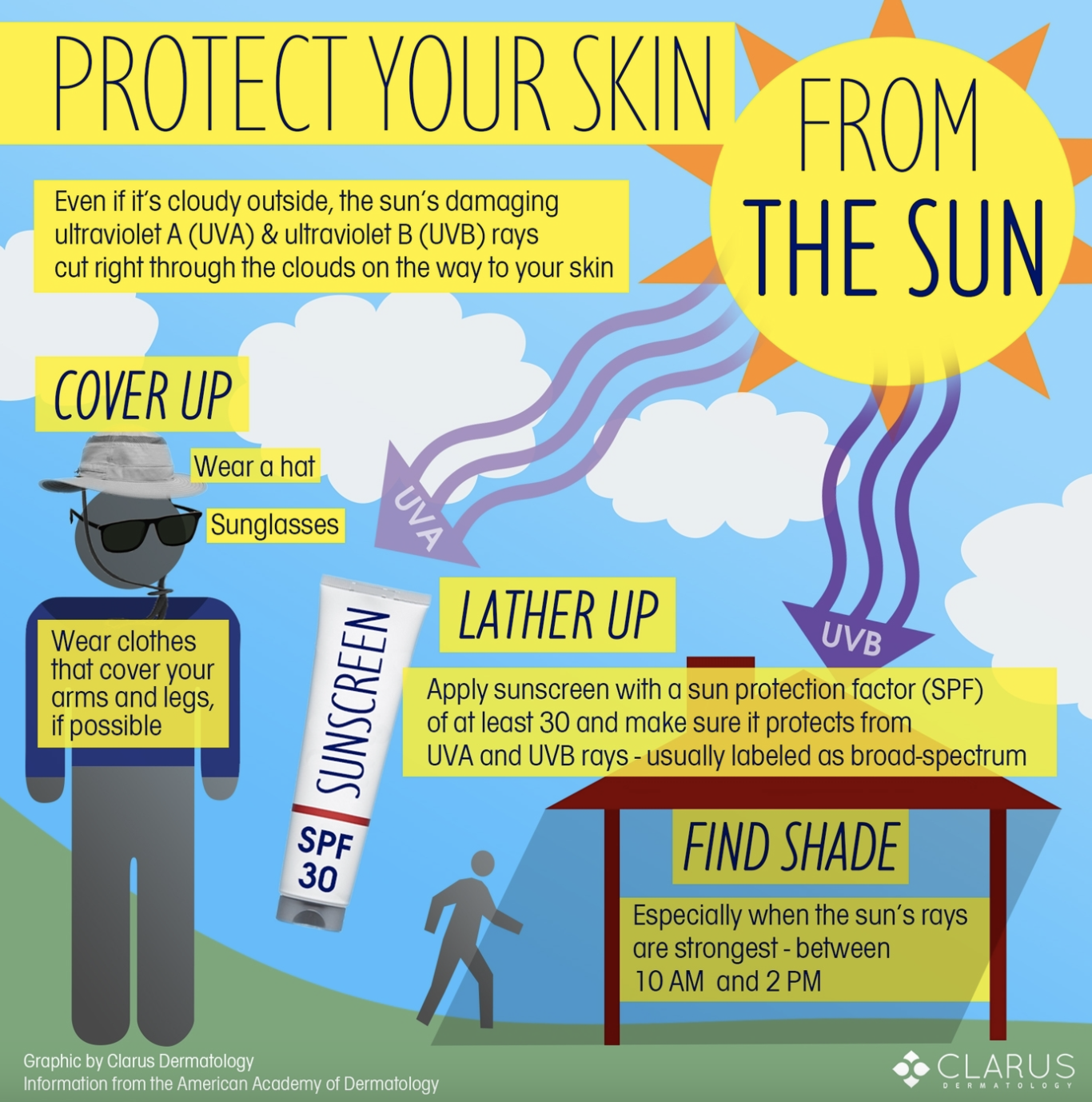
- Sunscreen: Apply broad-spectrum SPF 30+ sunscreen 15 to 30 minutes before going outside. Reapply every two hours and immediately after swimming, sweating, or toweling off. Use at least one ounce (enough to fill a shot glass) for full body coverage.
- Protective clothing: UPF-rated rash guards and swim shirts provide reliable, waterproof protection that does not need reapplication. Wide-brimmed hats and UV-blocking sunglasses protect the face and eyes.
- Shade: Encourage shade breaks during peak UV hours. At parks like Clearwater Park and Hugo’s community beaches, bring pop-up tents or umbrellas for reliable shade.
- Lead by example: Children learn by watching their parents. When kids see adults consistently applying sunscreen and wearing hats, they internalize these behaviors as normal and important.
Adults and Parents
Parents often focus so much on protecting their children that they forget about themselves. Adult sun protection is equally important—not just for skin cancer prevention, but for modeling the behavior you want your children to adopt. In addition to the sunscreen and protective clothing basics, adults should:
- Perform monthly self-skin exams and note any new or changing moles
- Schedule annual professional skin checks with a board-certified dermatologist
- Avoid tanning beds—they significantly increase melanoma risk
- Remember that UV exposure accumulates over a lifetime; it is never too late to start protecting your skin
Common Sun Safety Myths
Misinformation about sun protection is widespread. Here are some common myths that can put your family at risk:
- “It is cloudy, so we do not need sunscreen.” Up to 80 percent of UV radiation penetrates through clouds. Apply sunscreen regardless of cloud cover.
- “A base tan protects against sunburn.” A tan is itself a sign of UV damage. It provides an SPF equivalent of only about 3, which is far from adequate protection.
- “Dark-skinned individuals do not need sunscreen.” While melanin provides some natural protection, people of all skin tones can develop skin cancer. Sun protection is important for everyone.
- “Waterproof sunscreen does not need reapplication.” No sunscreen is truly waterproof. Water-resistant formulas maintain their SPF for 40 to 80 minutes in the water but must be reapplied afterward.
- “Higher SPF means you can stay out longer.” Higher SPF provides marginally more protection (SPF 30 blocks 97% of UVB rays; SPF 50 blocks 98%) but does not extend the reapplication interval. Reapply every two hours regardless of SPF.
When to See a Dermatologist
If you or a family member develops a concerning spot—a mole that has changed, a sore that will not heal, or a new growth that looks different from others—schedule an appointment with a dermatologist promptly. Early detection is the single most important factor in successful skin cancer treatment.
The team at Clarus Dermatology offers comprehensive skin examinations, including evaluation by our surgical dermatology specialists for any lesions that require biopsy or treatment.
Protect Your Family This Summer
Sun safety is a family effort, and it does not have to be complicated. With consistent sunscreen use, protective clothing, shade during peak hours, and regular skin checks, your family can enjoy everything Hugo and the surrounding communities have to offer while keeping skin healthy and protected.
Clarus Dermatology’s Hugo office provides convenient dermatologic care for families in Hugo, Forest Lake, White Bear Lake, Lino Lakes, and the surrounding Washington County area. Call (612) 213-2370 to schedule your family’s skin checks today.
Disclaimer: This article is for informational purposes only and does not constitute medical advice. Sun protection needs vary by individual. Please consult a board-certified dermatologist for personalized skin health recommendations.